
The Ultimate Guide to Social Media Marketing in 2025
Social media marketing refers to the application of sites to reach your target audience. You build your brand. You increase sales. And, you drive website traffic. This is by posting excellent materials on your social media pages. You need to hear your followers. You need to involve the followers. It is also important to analyze your results. Conducting advertisements on social media is beneficial.
This is a social media marketing guide. You will be taught the art of creating a winning strategy. We will cover key platforms. We are going to talk about content development. At last, we will examine the future of this discipline.
Building Your Social Media Marketing Strategy
Your plan of action is a great strategy. It guides your actions. It will make sure that your efforts are business-based. A strategyless posting of content is meaningless. You might not see results. We will make up your plan step by step.
Define Your Goals and KPIs
The first step is to find out what is to be accomplished. Your goals should be S.M.A.R.T. This implies Specific, Measurable, Achievable, Relevant, and Time-bound. As an illustration, one of them might be to grow the number of Instagram followers by 15 per cent in three months.
Then select your Key Performance Indicators (KPIs). These are measures of your progress. Common KPIs include:
- Reach: This is the number of distinct users who view your post.
- Activities: Likes, comments, shares, and clicks.
- Conversions: These are current users who do something they want to do, such as buying something.
- Profile Visits: A measure of brand interest.
By monitoring these numbers, we know what works. It shows what does not work. This information is used to make your future decisions.
Know Your Audience
It is impossible to reach a crowd you are not familiar with. It is essential to know your target customer. Create audience personas. These are the comprehensive descriptions of your target customers. Add demographics, age, location, and income. Other psychographics, such as interests, hobbies, and values, should also be included.
In which online locations do you think your audience spends time? Gen Z and younger audiences are more appropriate for TikTok and Instagram. LinkedIn is usually home to professionals. It is important to know this so that you can select the appropriate platforms. You are able to customize your content to them.
Conduct a Competitive Analysis.
Social media is already in the hands of your competitors. Analyze their presence. See what they do well. Find their weaknesses. Opportunity is found through a competitive analysis. Take a look at their content strategy. Which kinds of posts receive the most interaction? What hashtags do they use? How often do they post? Get this information to hone your methodology. Some tools can assist you in monitoring the competitor’s performance. This provides you with a standard of reference for your own success.
Create a Content Calendar
Social media success depends on consistency. A content calendar will become your guide for your posts. It guarantees consistency in the content. This makes your audience perpetually interested. Your calendar must outline what you are going to post. This should indicate when you will post. It must enumerate what platforms you are going to use. Planning saves time. It eliminates the urgency of creating content at the last minute. It also enables you to equate your social posts with other promotional campaigns.
Optimization of content for Social Media.
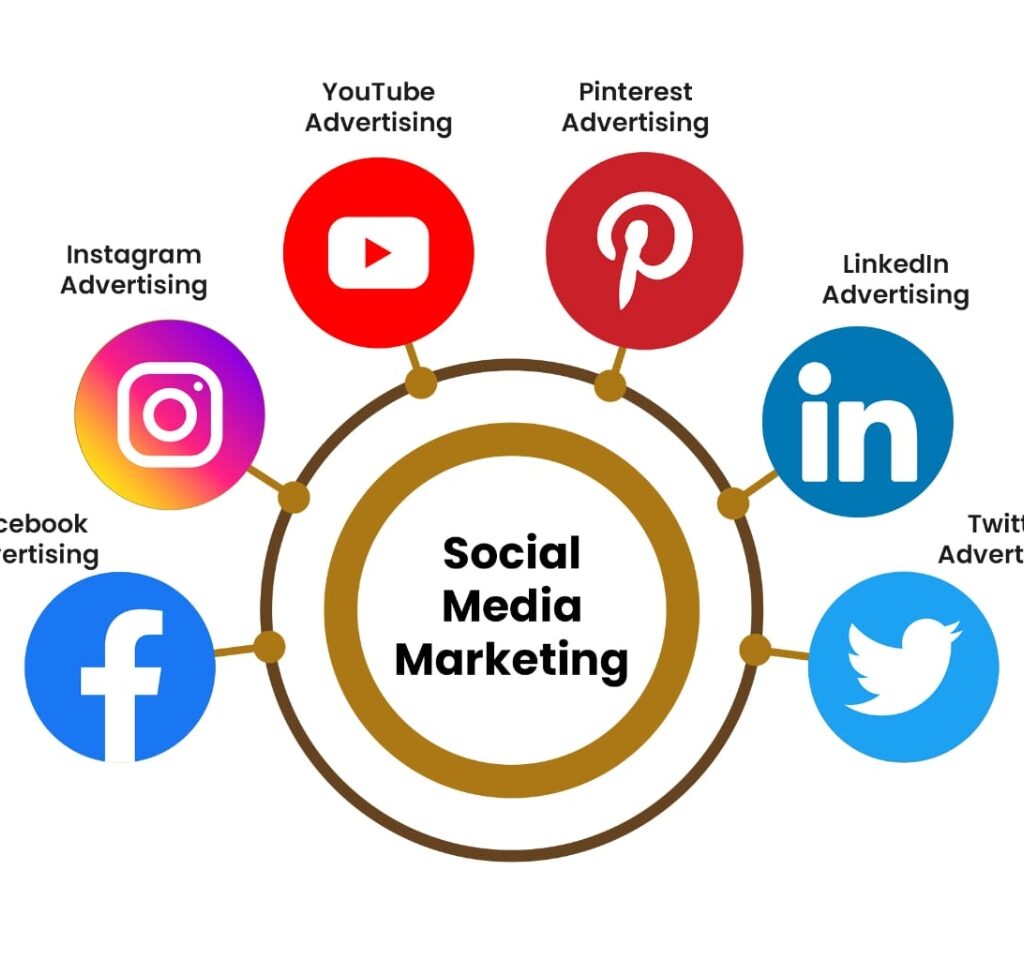
The various social platforms are dissimilar. What works on someone may not work on someone else. It is important to optimize your content for the specific network to have the greatest effect. This includes social SEO. Social media is used in search by people. Maximizing your profiles and content will make them locate you.
SEO Strategies on a Platform-by-Platform Basis.
The first impression people have is on your social profiles. Make them count.
- Usernames and Handles: Your brand name must be used.
- Bios and About Sections: Add applicable keywords that define your company.
- Profile Photos: Have a good, recognizable picture.
- Links: In building authority, use a consistent link in your bio.
It is also important in optimising content. Naturally, write your captions using keywords. Insert descriptive images’ alt text due to accessibility and search engines. Include appropriate hashtags, but do not excessively use the same. Three or five specific hashtags prove sufficient.
Crafting Engaging Content
What is on your content should be valuable. It can either educate, entertain, or inspire your audience.
- Short-form video is king. TikTok and Instagram Reels are the most efficient platforms to reach out to a new audience. Google goes to the extent of having short videos in its search results.
- They should also have high-quality images, and this is necessary, especially in the visual platforms such as Instagram and Pinterest.
- Polls, quizzes, and questions are interactive content that complements the engagement.
- User-generated content (UGC) creates a sense of trust. Exhibit the posts of your satisfied clients.
Keep in mind that you should customize content to the platform. LinkedIn must be written in a professional language. On TikTok and Instagram, more creative and informal content is possible.
Taking Metrics and Changing.
Social media marketing is not a one and leave it venture. You have to keep track of your performance. Your strategy has to be adjusted according to the data.
Measures and Metrics to Track and Analyze.
Utilize the analytics offered by the individual platforms. Such tools as Hootsuite or Buffer provide deeper reporting. Track your KPIs regularly. Look for trends. Which posts performed best? What time of the day is your audience the most active? By answering these questions, you get to know your audience in a better way. It enables you to make them more content with what they like. Bouncing rate can be high, indicating that you are not providing what the user expected. The large shares signify that your content is resonant.
A/B Testing Your Content
There is nothing to be fearful of experimenting. A/B testing is the establishment of two similar posts. You have one variable that you manipulate, such as the caption or image. Then you see which version is better. It is an evidence-based method that allows you to keep on refining your content. It allows you to test various headlines, calls to action, or types of posts.
The Future of Social Media Marketing
The world of social media is always changing. AI is transforming content creation. Voice search is becoming more common. Marketers must stay ahead of these trends to remain effective.
However, the future is not just about new technology. It is about a return to the core of “social.” The most successful brands will not just be content publishers. They will be community builders. They will create spaces for genuine connection. Engagement will shift from a simple metric to a measure of relationship strength. The brands that foster authentic conversation, listen deeply, and build real communities will not just survive. They will lead the next era of marketing. The algorithm may change, but human connection remains the ultimate goal.



6w2det